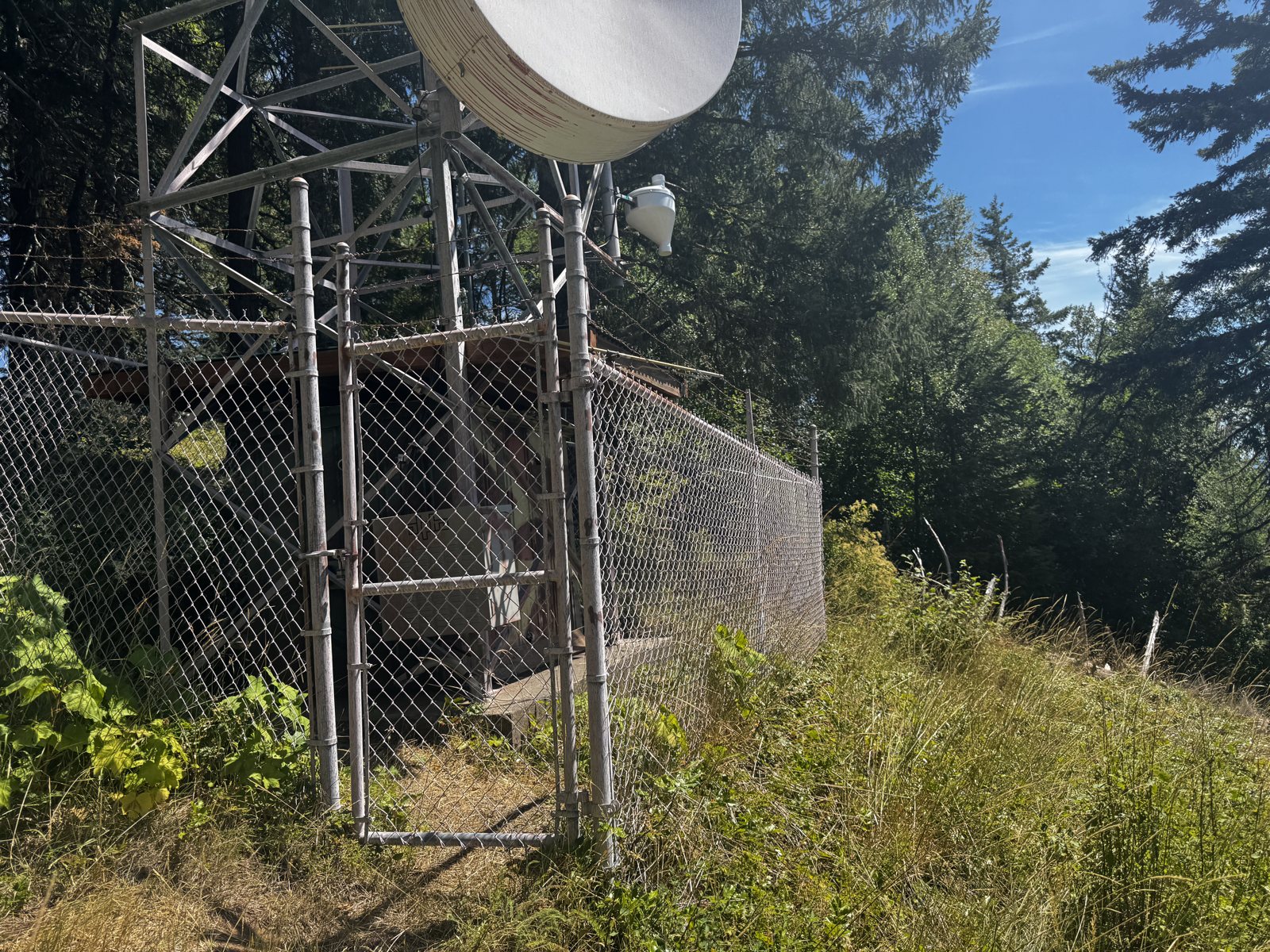
Dead Mountain Tower Site
Near Westfir: survey, site design, land use and Forest Service coordination for a new 100-foot tower beside an existing compound on Dead Mountain.

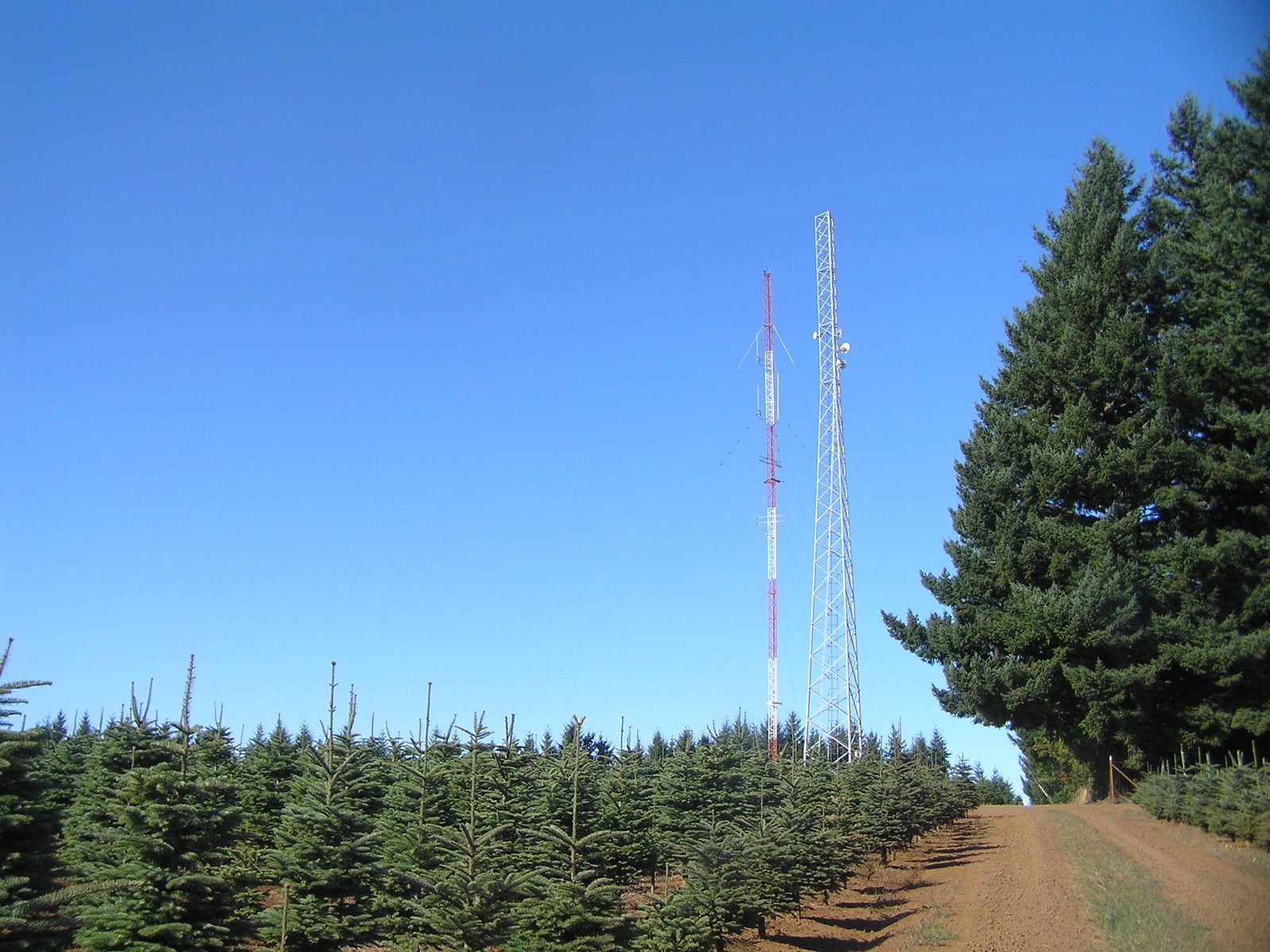
Silke Communications asked us to look at rust on a 200-foot guyed tower on Bald Hill, in the hills northwest of Salem. The tower dated from the early 1970s and carried a microwave link at its top.
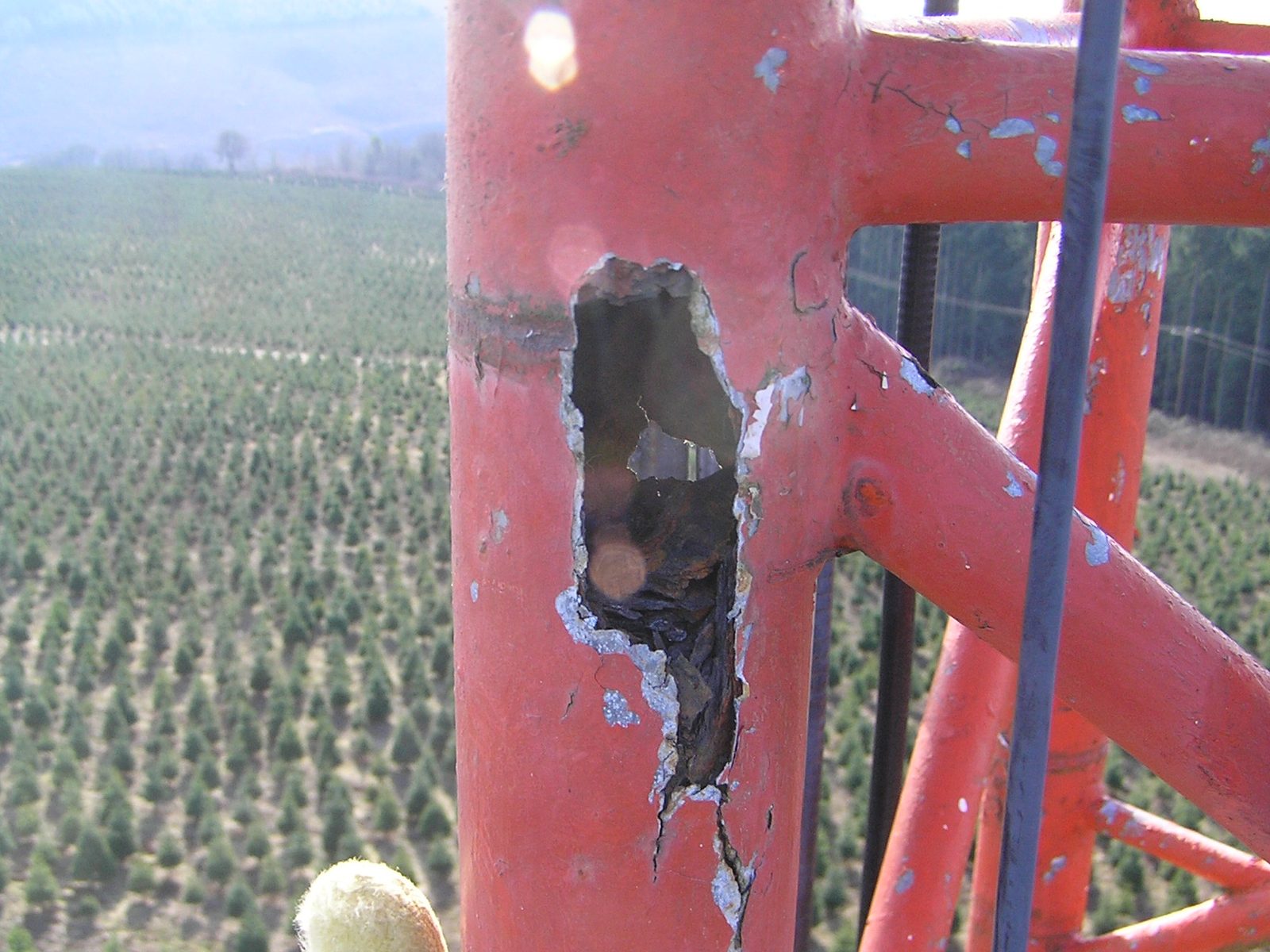
We climbed it in February 2011. By the second section there were holes in one leg up to two inches across, with the steel eaten away from the inside. Higher up we found a split in a leg six inches long, and flakes of metal that had dropped down inside from the sections above. We stopped climbing near the 95-foot level. Our letter to the owner said the tower was not safe and should be removed.
The microwave link still had to work, and it needed the full 200 feet of height. So the old tower could not come down until a new one was standing beside it.
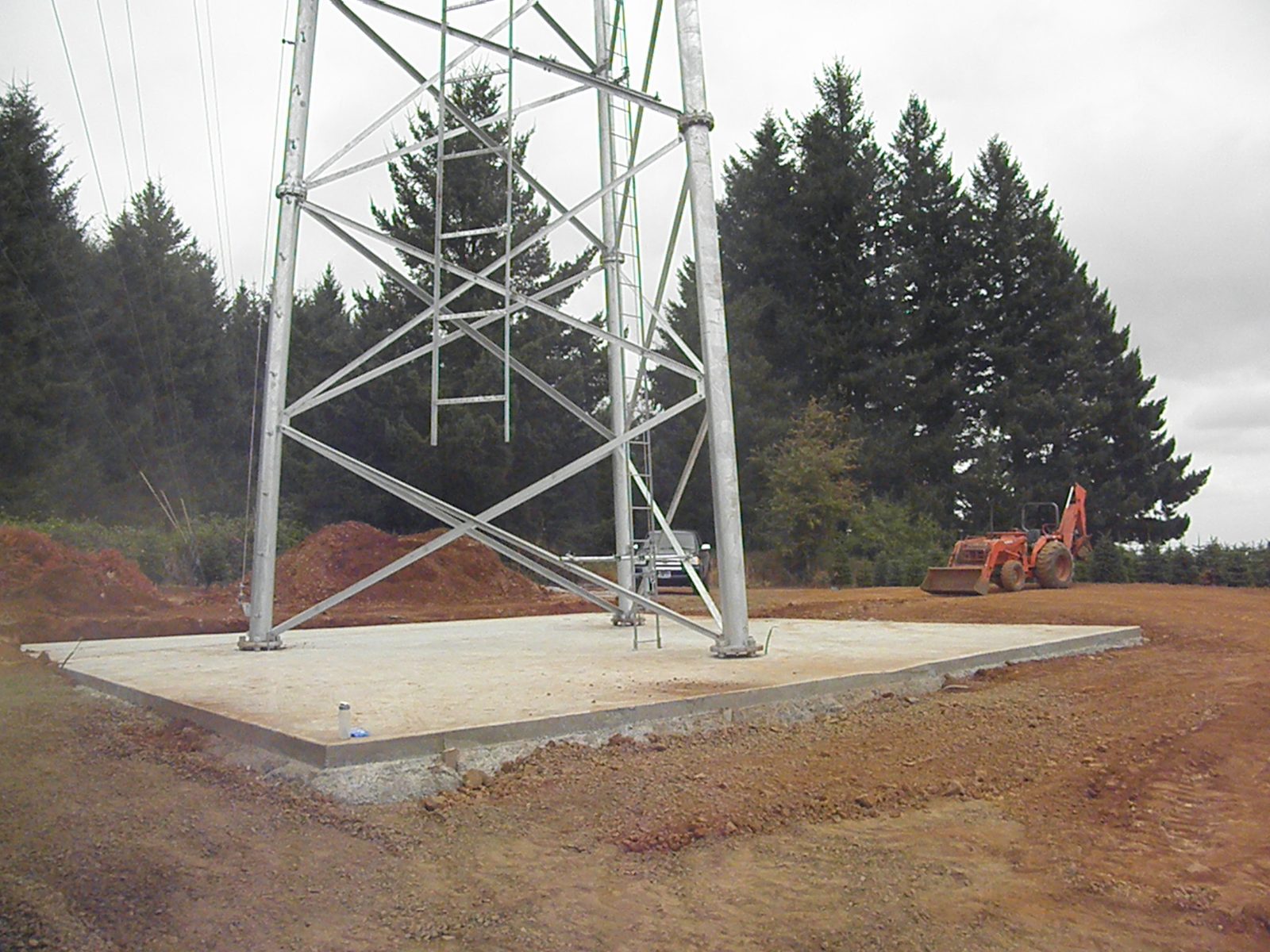
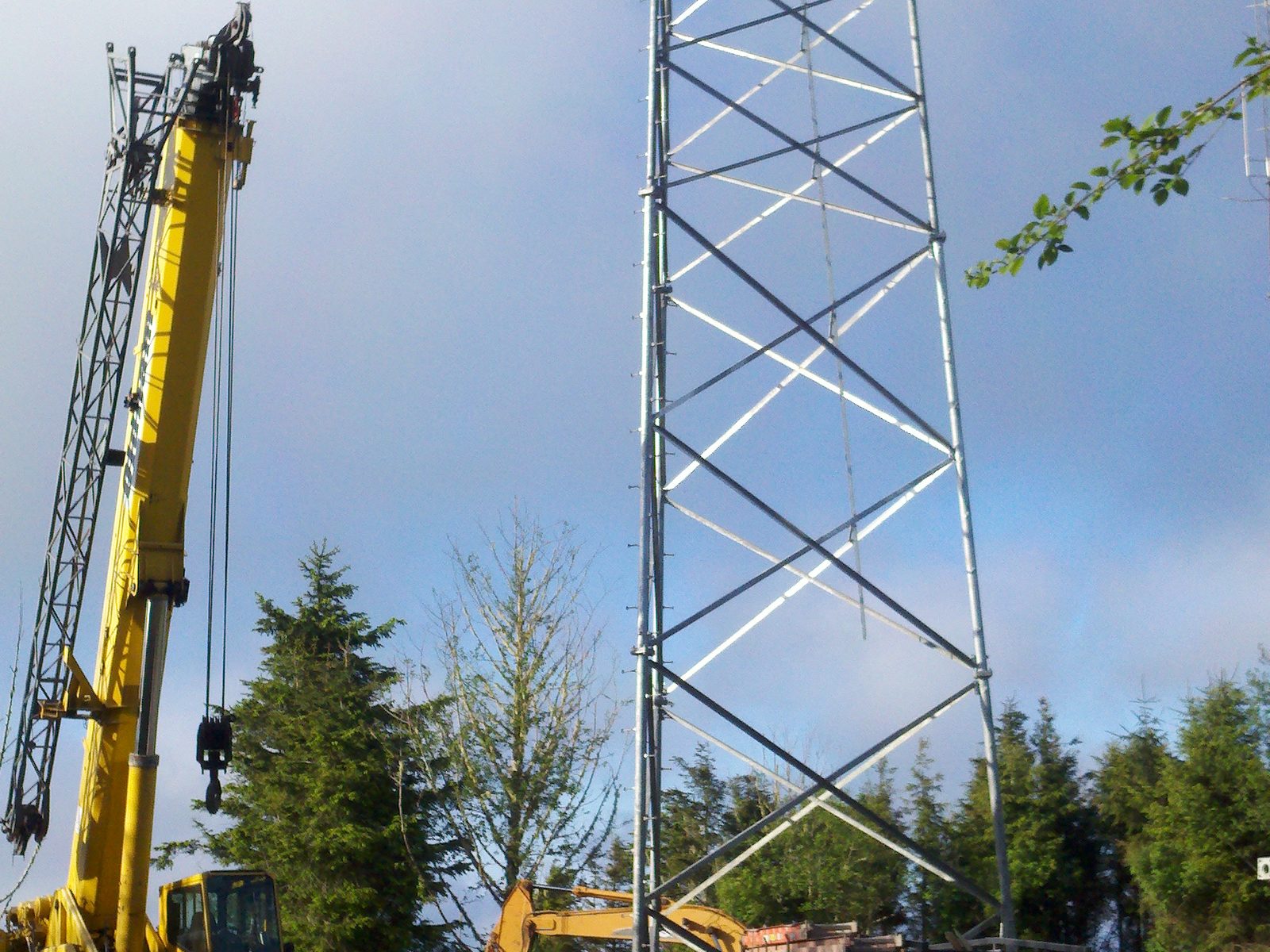
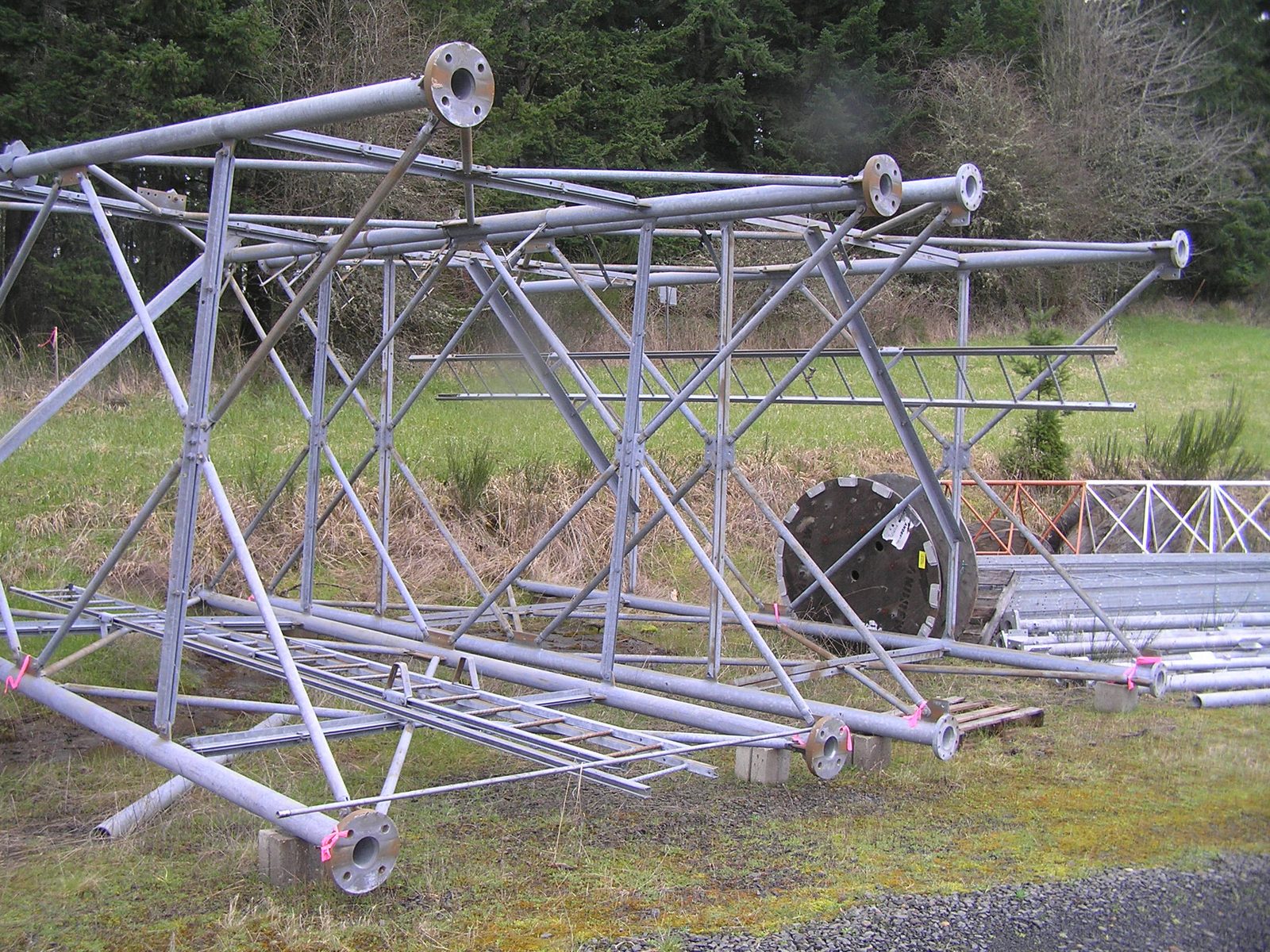
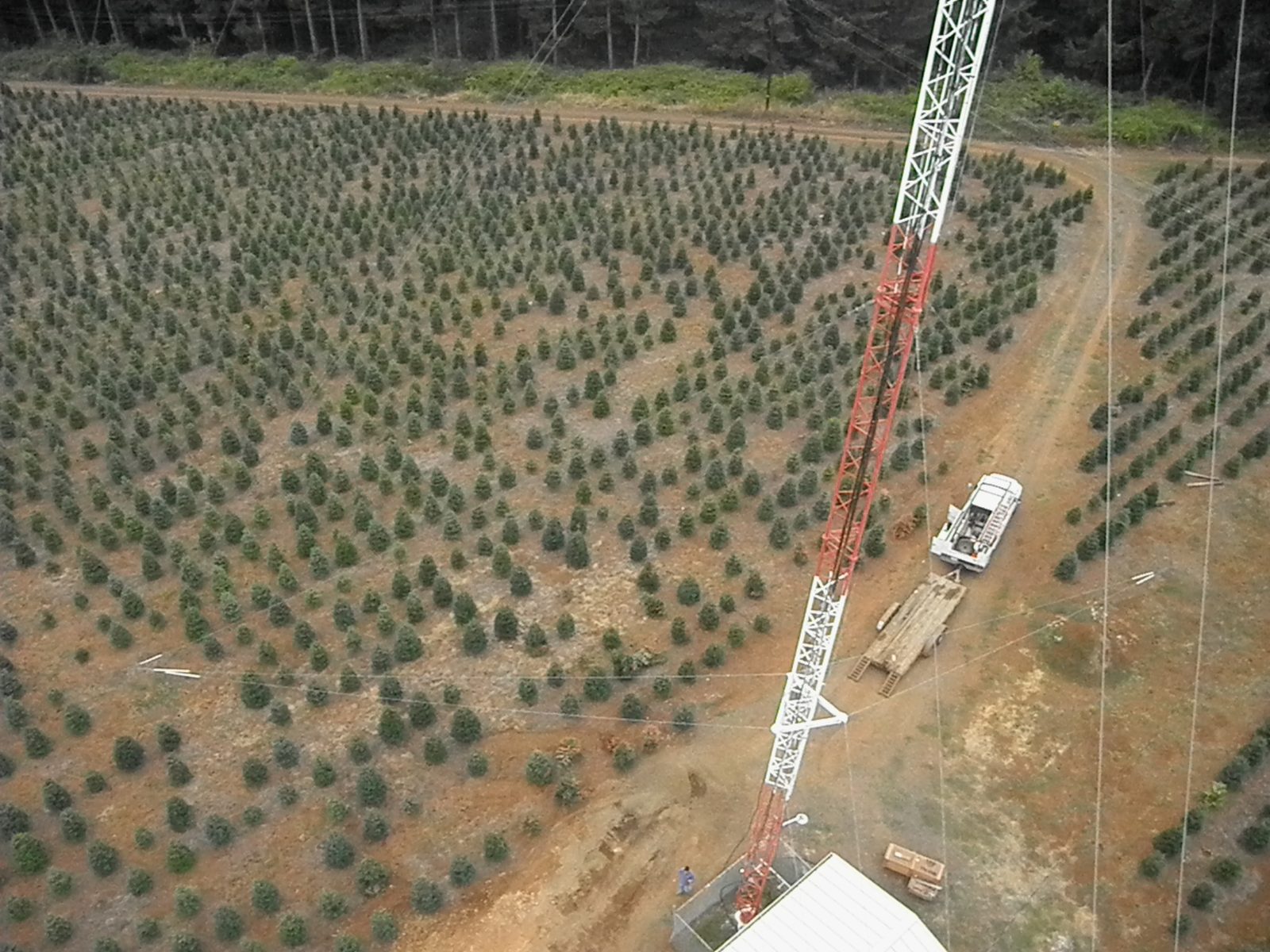
We designed the foundation for a new 200-foot self-supporting tower, placed on the north side of the equipment shelter so it would clear the old tower and its guy wires. Bedrock is close to the surface on the hilltop. Instead of cutting into the rock, we designed a mat foundation 36 feet square and 4 feet thick. Uplift and overturning governed its size, so we spread the footing wide and kept it as thin as the anchor bolts allowed.
The tower itself was designed by its manufacturer for a 95 mph wind with a quarter inch of ice. We took the manufacturer’s footing reactions and showed them on our foundation drawing.
When the tower was up, in September 2011, we climbed it and checked the bolted connections at the section splices and bracing, as the building department required. We reported that the tower had been properly erected and the bolts properly tightened.
Then we wrote out the method for bringing the old tower down: which guy wires to release and in what order, so it would fall downhill to the southwest and away from the shelter that had to stay.
The new tower was standing and certified by mid-September 2011, and the microwave antennas had been taken off the old one. A tower that was close to collapse was ready to come down in a controlled way, with its replacement already standing beside it.
Near Westfir: survey, site design, land use and Forest Service coordination for a new 100-foot tower beside an existing compound on Dead Mountain.
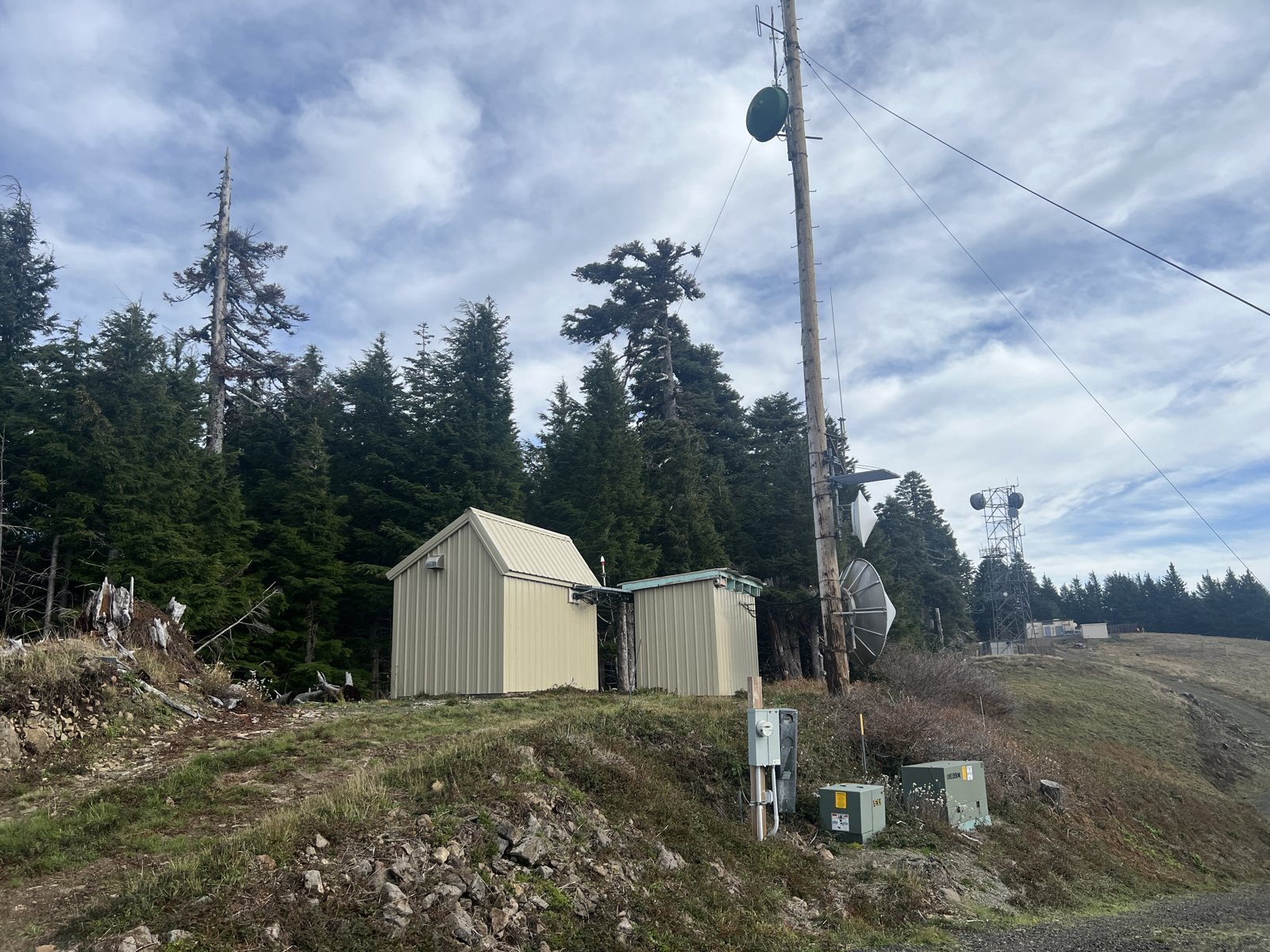
Corvallis: a new 100-foot self-supporting steel tower replacing a decaying wood antenna pole on Marys Peak, taken through public land use approval and permit submittal.
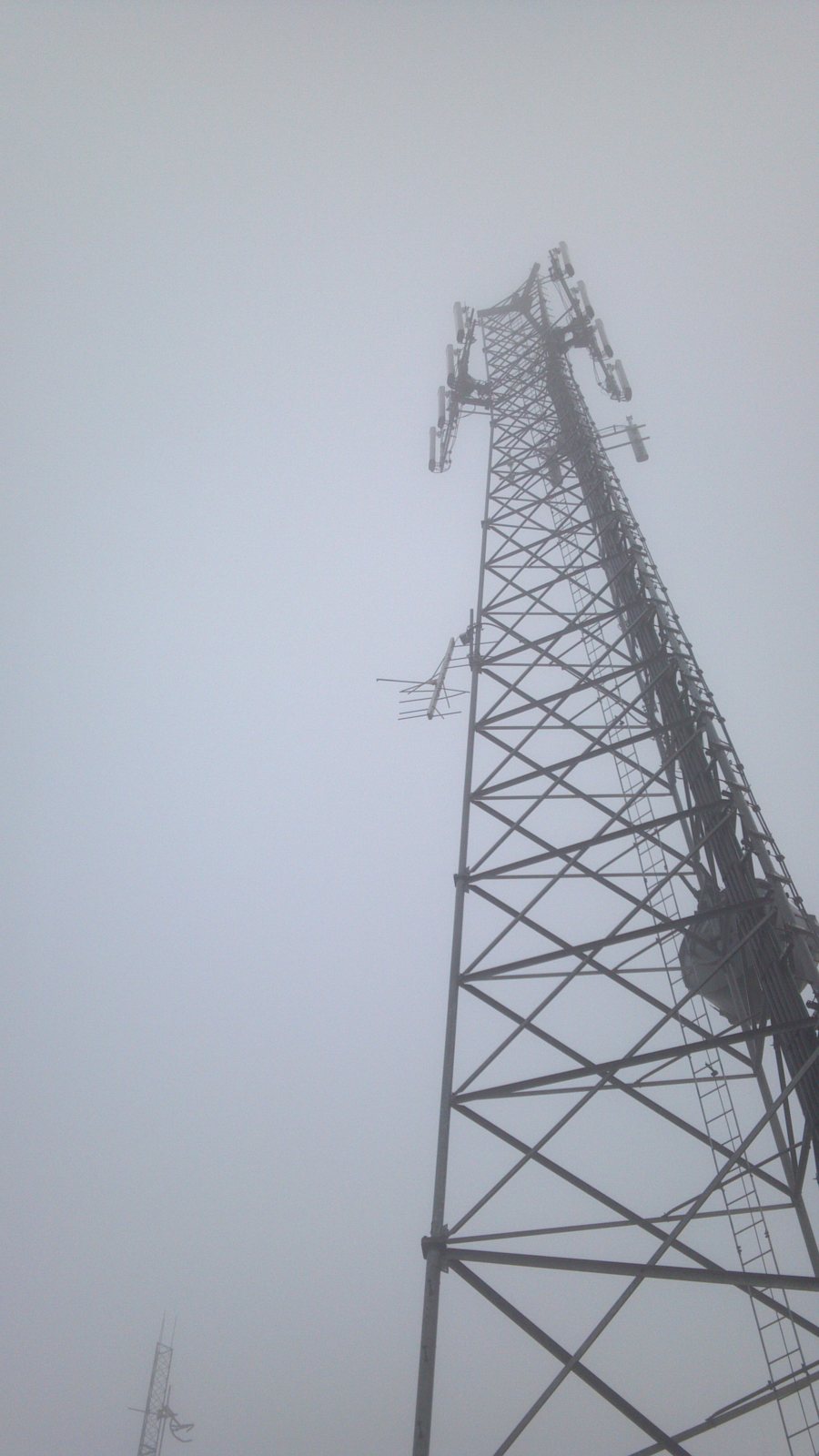
Otter Rock: foundations for a new 150-foot tower built around a working one, so the antennas stayed on the air during the changeover.
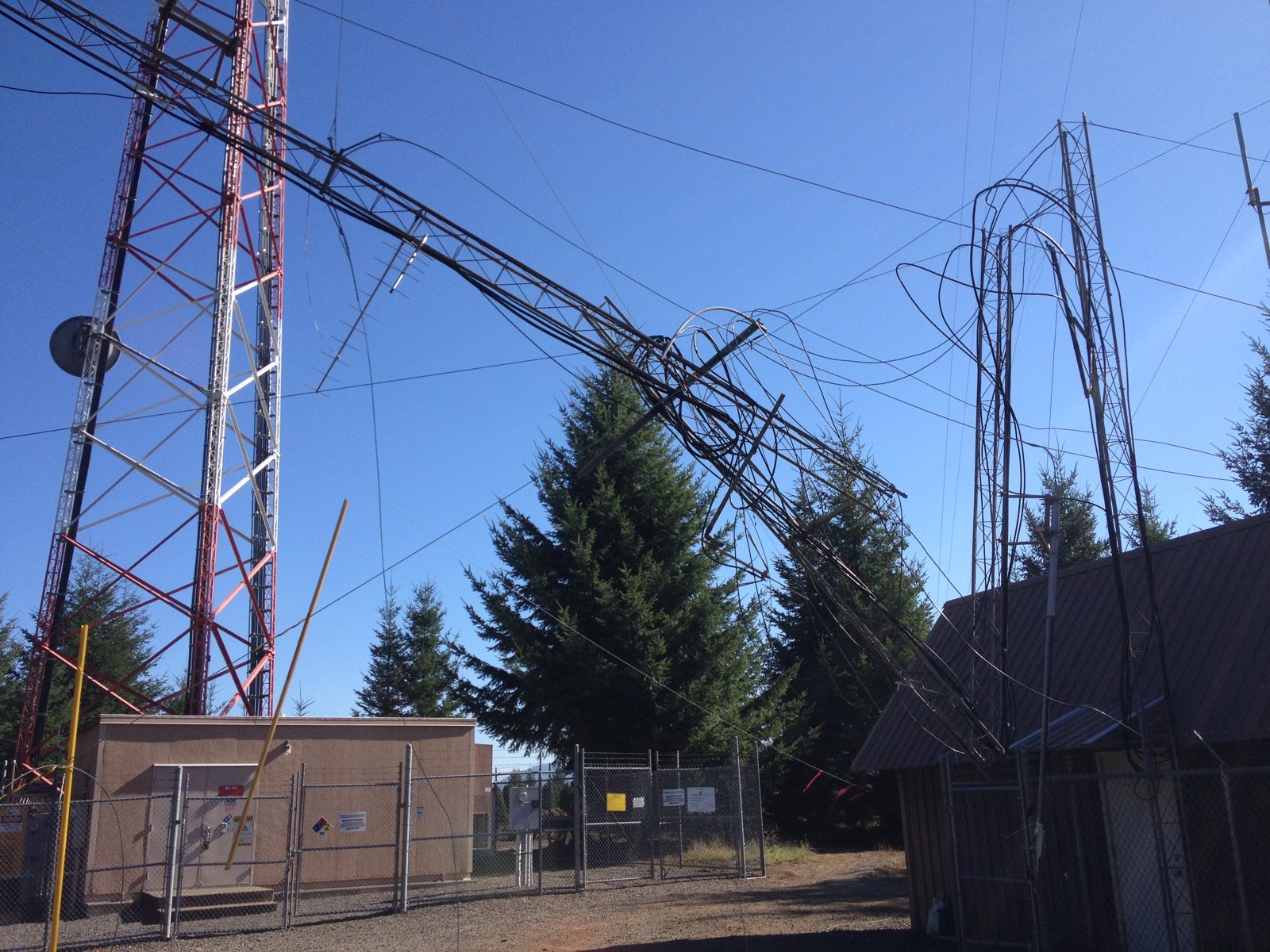
Lyons: after a guyed tower collapsed into its neighbor, JBE planned a safe controlled demolition and permitted a single new 200-foot self-supporting tower.
Near Westfir: survey, site design, land use and Forest Service coordination for a new 100-foot tower beside an existing compound on Dead Mountain.
Corvallis: a new 100-foot self-supporting steel tower replacing a decaying wood antenna pole on Marys Peak, taken through public land use approval and permit submittal.
Otter Rock: foundations for a new 150-foot tower built around a working one, so the antennas stayed on the air during the changeover.